Can Police Track You on the Dark Web? What a Case Can Prove
Police can identify some users through evidence tied to services, devices, payments and activity outside the network. That is different from automatically identifying everyone who opens Tor. A sound answer depends on the particular investigation; neither a blanket promise of safety nor a claim of universal tracking follows from public cases.
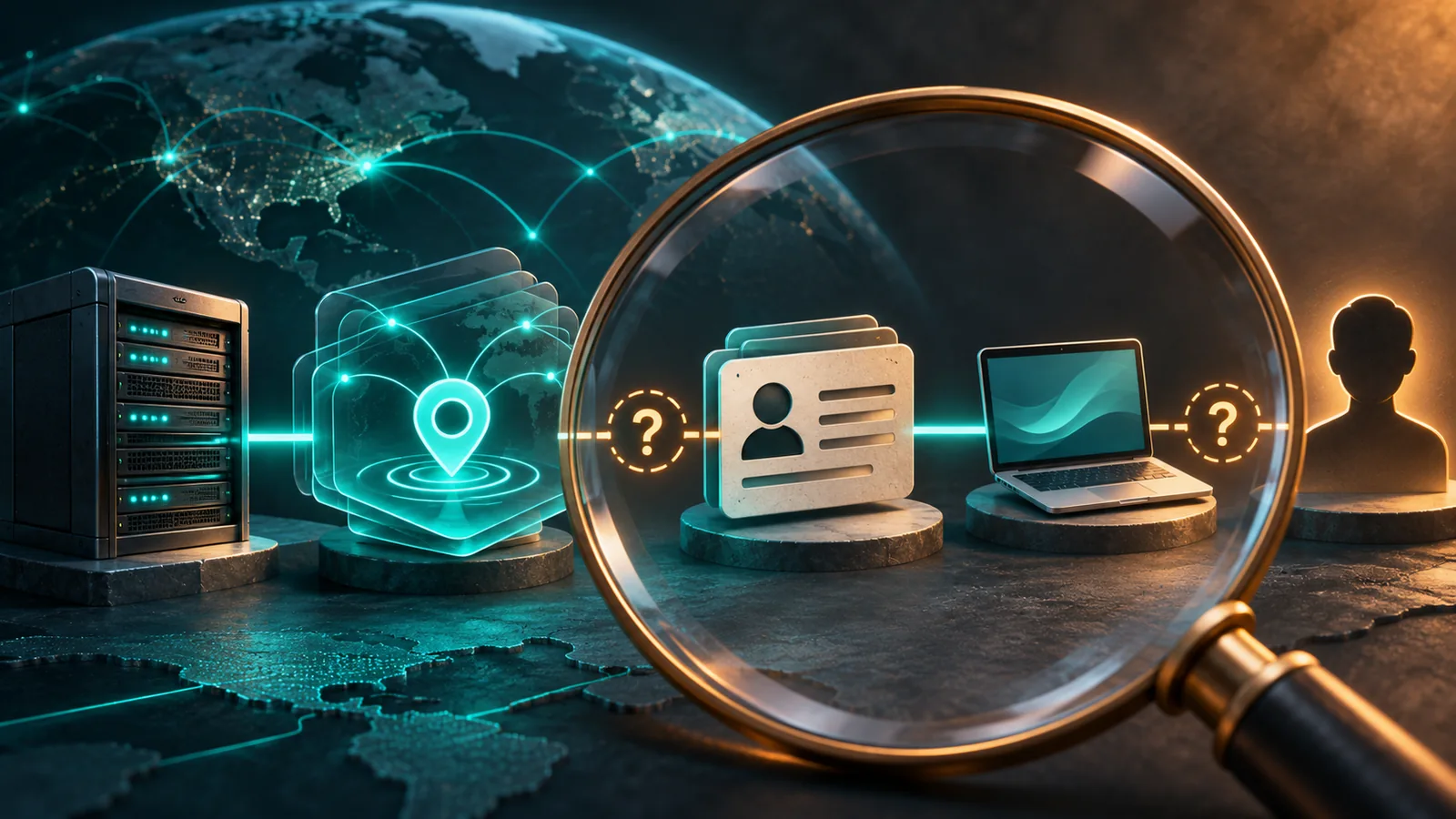
How strong is the particular tracking claim?
An official record can establish a targeted investigative result.
Drawn from law-enforcement records.A username appearing in a discussion does not independently identify a legal person.
Drawn from historical records.An old case should not be treated as proof of a permanent capability against every future client.
Drawn from official documentation.“Track” can mean several things
Following an account’s posts, observing a transaction and connecting conduct to a legal identity are different tasks. A service may recognize an account without knowing a person’s name. Investigators may later connect it to outside evidence.
When someone says police can track a user, ask what was identified and how the record supports that statement. A broad verb can otherwise make a limited observation sound like complete surveillance.
Match the conclusion to the evidence
| Subject | Evidence type | Necessary caution |
|---|---|---|
| An account was observed | Service interactions | An account is not automatically a named person |
| A device was examined | Endpoint material | The result does not establish every other device is exposed |
| Funds were followed | Ledger and institutional records | Transfers and ownership require separate support |
| A person was charged | Legal allegations | Charges are not the same as a final finding |
Do not invent promises about police attention
It is not responsible to assure every reader that a certain activity will never attract attention or that only serious offenders are investigated. Priorities, laws and circumstances vary. The evidence also does not support saying every ordinary user is automatically identified.
For lawful use, focus on supported software, the data you disclose and applicable rules. A privacy tool changes particular technical properties; it does not determine legal permission or an agency’s interest.
The destination can already know the account
Suppose a website receives messages under a registered identity. Records of those messages concern what the application received, without requiring someone to discover every relay on the connection path.
A network tool cannot erase information voluntarily supplied to a destination.
Questions people ask
Sources
Further reading
Glossary
Terms in this guide
Continue learning